<p>
[/av_textblock]

Where can I get a Guide / Service / PTSD dog?
Good afternoon Lawrence,
My name is Evin. I was in a serious accident 4 years ago. I was hit from behind by a drunk driver while driving my ATV. I had injuries that have affected my vision and mobility.
My case manager and rehab team have discussed and applied to the lions club of Canada, Oakville, Ontario for a guide dog. They have also discussed another option of PTSD service dog. I guess I am a little complicated because I have a few issues. I am hoping that I will fit somewhere.
I am attending Orientation and mobility training with the CNIB. I am so excited about my training and I can’t believe how the power of touch can change your life!!
The CNIB has provided me a list of the different guide dog organizations, but will not recommend any one organization in particular. I do understand why they are not in the position to do so. The Mira foundation was listed. Is there a minimum sight loss that the Mira foundation requires?
I also found the link to your website and I am very impressed! You are a very talented man! I remember many years ago, when a friend told me about you and your passion for life and fishing! I enjoyed fishing with this friend and we always had time to talk about our life experiences and that is when I heard about you, sitting in a boat/ a porta boat to be exact.
I know that you are very busy, but I would love to hear from you.
Thank you very much for your time.
Sincerely, Evin
Hello Evin,
Having gone blind three different times in my life, first as a child who lost central vision, second as a young man who had to learn to live without seeing important details, and third as someone later in life who has since lost the ability to see light and movement. Three different events with vastly different outcomes. It may have been easier to just jump right to the end, but that wasn’t the hand that I was dealt.
It takes time to readjust to new circumstances. Progress can be quick to begin with, but the last finishing touches can take more time and effort. You know you will have reached full rehabilitation when you start getting through your days without the disability coming to mind. It’s possible.
With respect to guide dog schools, there are two issues that need to be considered. One, the quality of the dogs and training, and two, the after-care support. In my opinion, Mira does a good job at both.
The issue with seeing well and using a guide dog is that you won’t necessarily follow the dog and this will end up putting you in a dangerous position. Don’t worry, when you are assessed for guide dog training they will cover your eyes.
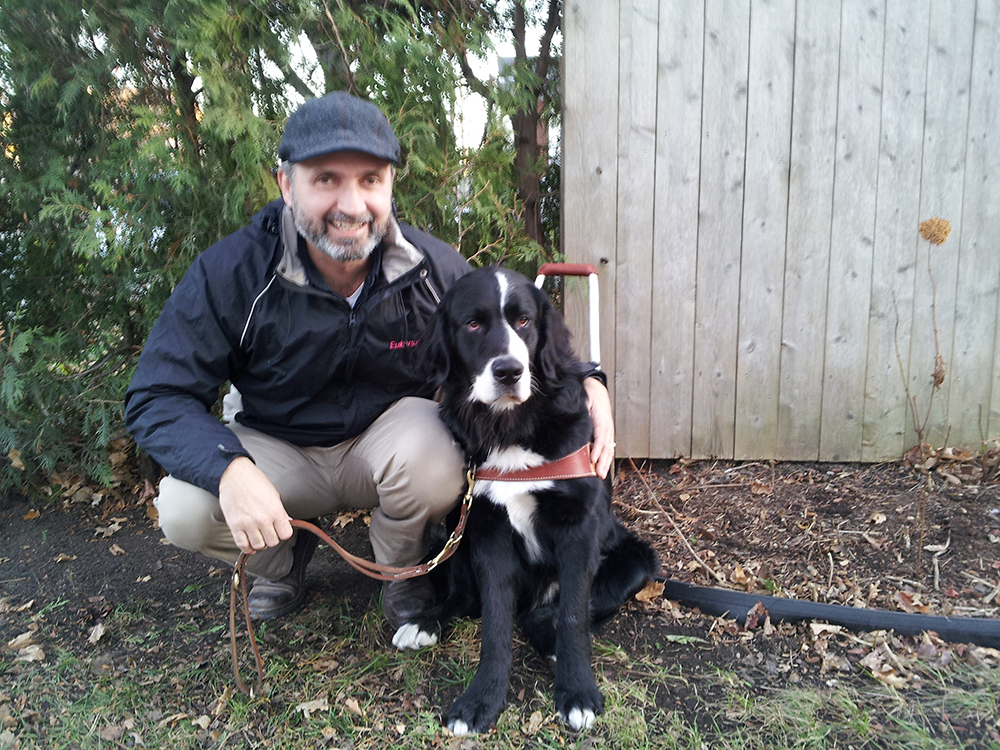
You aren’t the only one with multiple challenges and service requirements. How well a service dog school can train a dog to address your specific blend is the real question. I know Mira has been in the fore-front of innovative thinking and training in this regard, but you will need to determine that for yourself. Not all schools want to deal with people who cross over lines of the traditional service dog types.
Having good independent mobility and orientation skills is important, and to this end, Mira is the only school in Canada that has an O/M instructor on site throughout each class. You only need to be able to leave your home and get around the block and back on your own to qualify. With 80% unemployment among the blind in Canada, there are lots of folks with guide dogs who don’t often have the need to venture far from home.
I’m not totally familiar with the specific services PTSD dogs provide, but I can say that all dogs bond and eventually reflect your emotional state. You will learn to know your mood from your dog’s behaviour before you know it yourself. They are truly gifted in non-verbal communications. It’s us who depend on language. Dogs read body language and smell different emotions. We should all learn from dogs how to be more sensitive to each other’s emotional and physical state.
Keep me posted on developments if you want, and please feel free to reach out as you see fit.
Best regards, Lawrence

Outdoors with Lawrence Gunther Update
It’s been three months and 12 episodes since we launched the podcast Outdoors with Lawrence Gunther. Producing the podcast is challenging as it’s not simply long-form interviews.
We feature people and places of interest to Canadians seeking new, interesting and accessible outdoor adventures. Each 28-minute episode is subdivided into five segments: a short introduction , a conversation with young Lilly about interesting facts she’s found that relate to the storyline, a bucket list feature designed to tempt you to try something new, some tips and related tech to make sure you get the most out of your adventure, and some campfire reflections about my own experiences as a blind outdoor enthusiast.
If you like what you’re hearing, please take a minute to send us some “love” in the form of ranking and comments. Please visit Apple Podcast to make your feelings known so that others might find out about the resource we are working so hard to create: https://podcasts.apple.com/ca/podcast/outdoors-with-lawrence-gunther/id1530444764
We also welcome your suggestions. Reach out over Facebook by visiting our fan page at Lawrence Gunther Outdoors.
Send an email to Lawrence@LawrenceGunther.Com
Or send us a Tweet
@LawrenceGunther.
Here’s some interesting content we came across recently that you might want to check out. James Black from Wilderness redefined is a blogger on the many benefits (mental, physical, and family bonding) of being around nature and getting outdoors. His blogs are full of practical info and tips. You can link to his latest blog here: https://wildernessredefined.com/benefits-of-being-outdoors/
Thanks for listening and stay tuned. We will be announcing some give-aways soon!
Warmest,
Lawrence and Lilly

Lawrence Gunther – Fisher, Filmmaker, Adventurer
Nov. 17, 2020
Written By Shana Cesaire
Ottawa Adventure Film Festival
Lawrence Gunther is the host of this year’s Accessibility in Adventure program. Lawrence has established himself as a pillar in our community. Declared legally blind at the age of 8, and progressively losing more of his sight as he aged, Lawrence has not let his disability hold him back in life.
Upon visiting his website, you will quickly observe that Lawrence is always booked and busy – when not fishing, he can also be found kayaking, sailing, cross-country skiing, and much more. He also produces a lot of media – podcasts, video series, and film.
We talked to Lawrence about what he’s working on these days and his love of film.
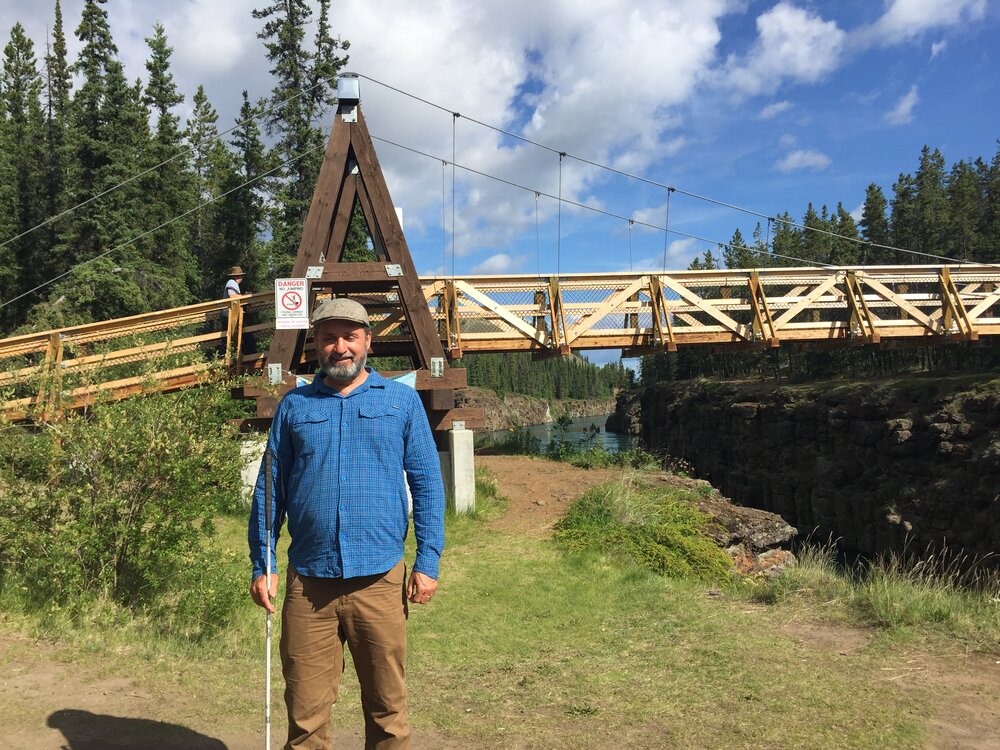
Lawrence Gunther at Miles Canyon
You seem to be a jack of all trades. Is fishing your number one sport?
Yeah, I think I would say I fish about 70 days a year. I like fishing because it’s a way for me to connect to nature in all the ways that are not visual. A lot of people enjoy nature through their eyes, but I enjoy nature through all of my other senses, and that includes connecting with nature directly with my hands and through smell.
Tell me about a project that you’re working on right now
What’s capturing my attention these days is the fact that we’re seeing a lot of people who have picked up fishing this year because of the pandemic – which has meant more fishing lessons this year than ever before. A project that I started with some support from donors is called Urban Fishing. We are trying to start a process of identifying urban shoreline spaces that are well suited to become naturalized spaces to allow youth and others to access for fishing.
We documented what Toronto has done in four different spaces along the Lake Ontario shoreline, and now we’re replicating that in the Ottawa area. We hope to share that blueprint with other communities that are interested in identifying those fishing areas within urban spaces for youth. Not everyone has the chance to get out of the city to go fishing, and it’s important that people have that chance to connect with nature.
What areas in Ottawa would that include?
The Ottawa River, Rideau River, Dows Lake, Mooney’s Bay. A lot of these places are nice and hidden.
What was it like MCing for OAFF last year?
I was the MC on a night that featured one of my friends’ documentaries. It was a lot of fun. It was great to be able to tell a few stories and share some reflections. I’m excited to host the program this year.
What else made you want to be a host for the film festival this year?
 I love film. I took a course in media studies, and was told by the professor to drop the course. When I asked why, he said that it’s because I can’t see a lot of the material – it’s a lot of print and a lot of video, and none of which I could see so it won’t be possible for me to do the course. I said “I know I can’t see the material – that’s why I’m taking the course, because I’m really interested in knowing what I’m missing!â€Â So I stayed in the course.
I’ve always had a passion for photography, even though I was registered blind at age 8. When I was in college, I met another young man who was visually impaired, and he was a professional photographer. I became his helper for a few years on a bunch of projects, and it was fascinating. I loved it. I still have a strong interest in producing film.
What films have you produced?
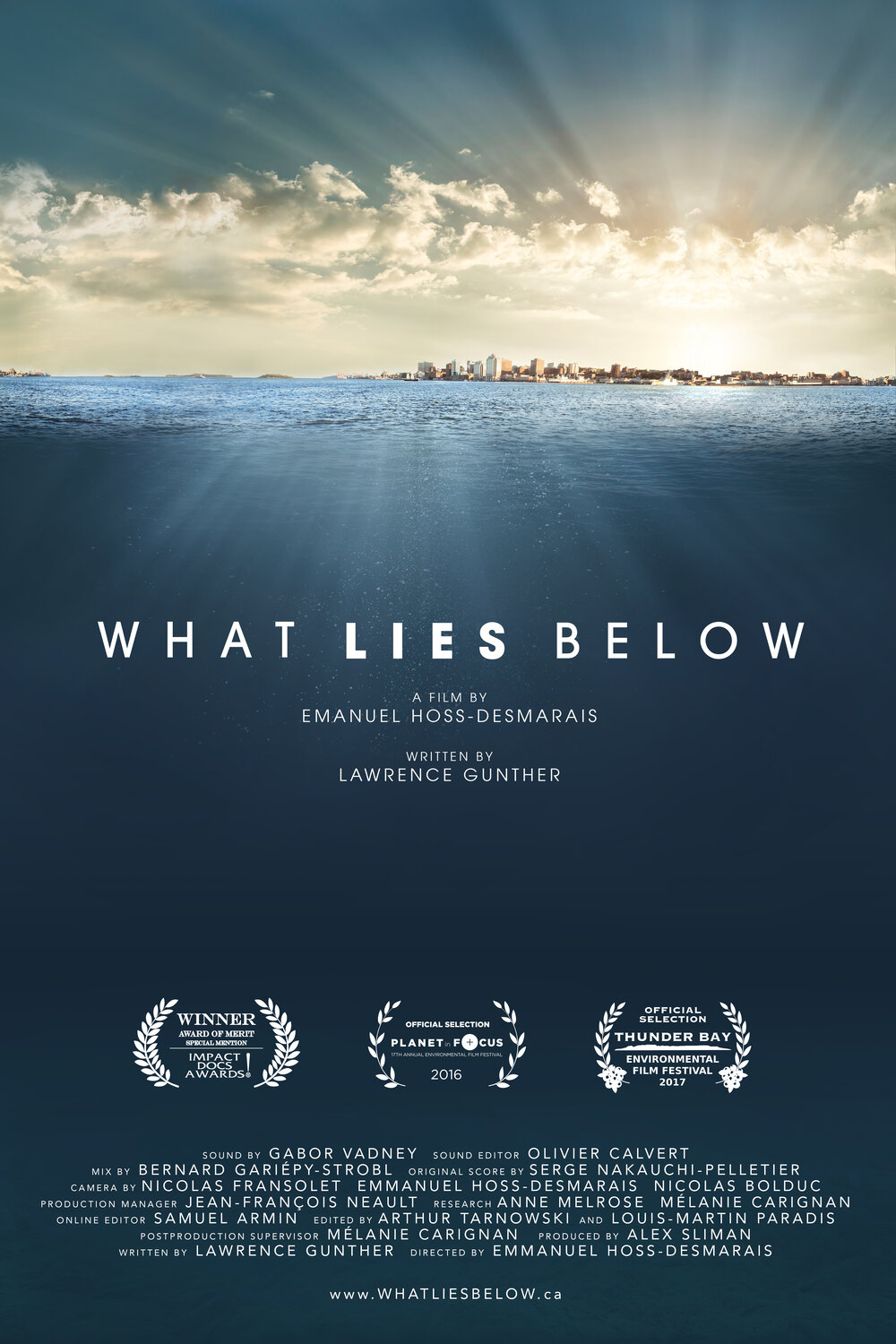
I created a 79 minutes documentary, What Lies Below, that just finished a three year exclusive airing through CBC. I also do Lake2Plate mini documentaries with Five2Nine. I did a one hour documentary about the Yukon. And a bunch of other smaller short-form content.
So you are still very much involved with film projects.
Yeah, I like to get involved in projects that I can actually get involved as a producer or creator.
I know that you lost your vision in three different stages in life, and that experience has shaped your life at least three different times. Do you have any words of encouragement for others who have had to go through similar adversity and who also want to live their life to the fullest, specifically in the outdoors?
With everything in life, there’s sacrifices and things that happen, and things you lose. It’s important to grieve those losses, and through grievance we develop an understanding. Whether it’s a loss of sight, or something you really like to do that you can no longer do. When we go through that grieving process, we put a phase of our life behind us so that we can open up new phases in our life without getting stuck.
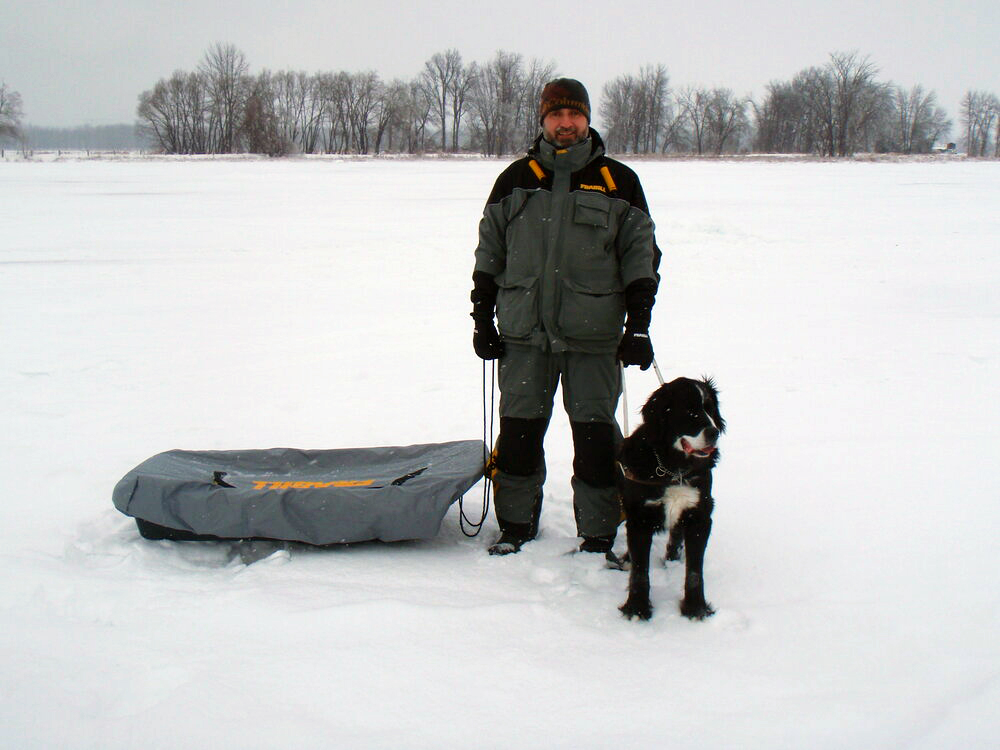
Lawrence and Moby
Do you feel like we’ve progressed more towards creating an authentic space in media for people who are visually impaired?
Not yet. I think there’s strong demand and financial incentive to do the tell-all, introspective storytelling. But I think it’s based on the assumption that being blind must be hell. By telling stories about blindness, you’re feeding into that myth. We’re all lacking in some way, but it makes us unique and helps us develop different perspectives. I think we have to realize what that perspective is and how it’s better in some ways. That’s a conversation that hasn’t really started yet.
Do you feel like you have opportunities as a blind filmmaker?
I am fortunate to have people behind me that believe in my ability to produce film, but I don’t think that’s a given. People would think that anything that had to do with film and me would be a focus on my vision loss, and documenting that. That’s not what I do. I don’t do videos that focus on my vision loss. I use my vision loss as a strength in the way that I create film. It’s not a disability, it’s a new way of approaching it.
Lawrence Gunther is definitely a pillar in our community, and we look forward to welcoming as host of our Accessibility in Adventure program on November 18.
See the full film festival program and get tickets here.

Makings of a Guide Dog
On a number of occasions over the past half-dozen years, CEO and President of CNIB John Rafferty and I discussed the possibility of the CNIB offering a guide dog program unique to all others. It was a need that John was convinced Canadians everywhere living with vision loss required, as I did. Canada is a big diverse country with a population disbursed throughout rural, remote, northern, and urban communities. Each setting poses its own unique set of challenges.
Who better than CNIB to ensure people living with vision loss receive guide dog services in their communities?
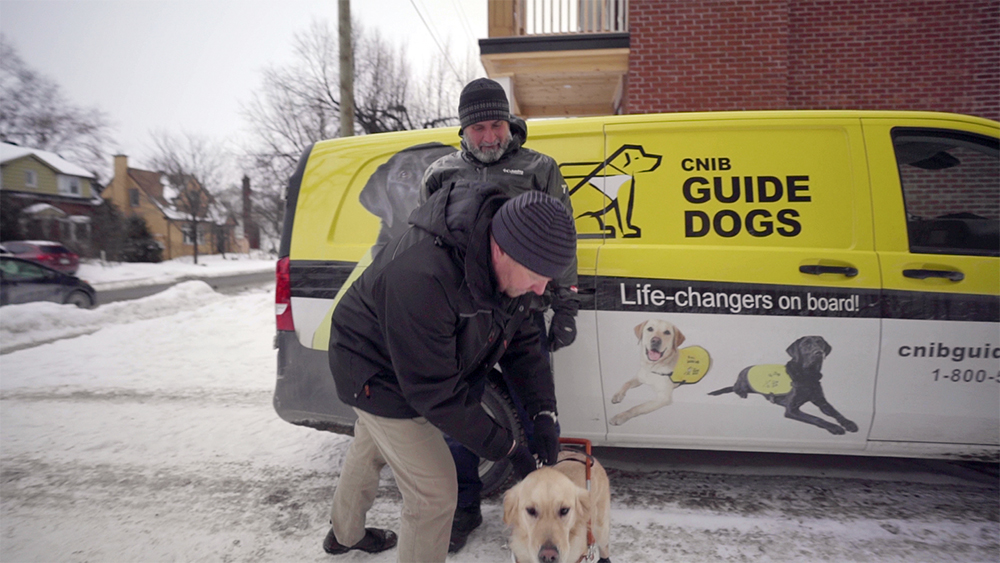
In November 2018, I was recruited to join CNIB Board of Directors, which was also the same year that CNIB decided to move forward with its own guide dog program. I wanted to do my bit to help out with what I knew would be an important project for any Canadian living with vision loss. Little did I know then that this invitation would lead to my filming a documentary: Makings of a Guide Dog.
This was a time of strange coincidence because this was also the time that my beloved guide dog Moby suddenly passed away from cancer. He was only eight years old. I knew my next guide dog would come from the CNIB, but that’s about as far as I had thought through the process. It wasn’t until John and I were having dinner together during CNIB’s 100th annual general meeting that we began talking about how best to inform Canadians about CNIB’s new community-based guide dog program. People needed to know there now exists an in-Canada and at-home guide dog matching service that is focused exclusively on training guide dogs.
After thinking it over, I came up with the idea of a video series that would document the guide dog training process. The title explains it Makings of a Guide Dog. The idea was to document and share with the public my own guide dog matching experience. We would document the practical aspects of the pairing process, but more importantly, capture the kind of skills that my guide dog would need to learn and develop in order to support me in my very active outdoor lifestyle.
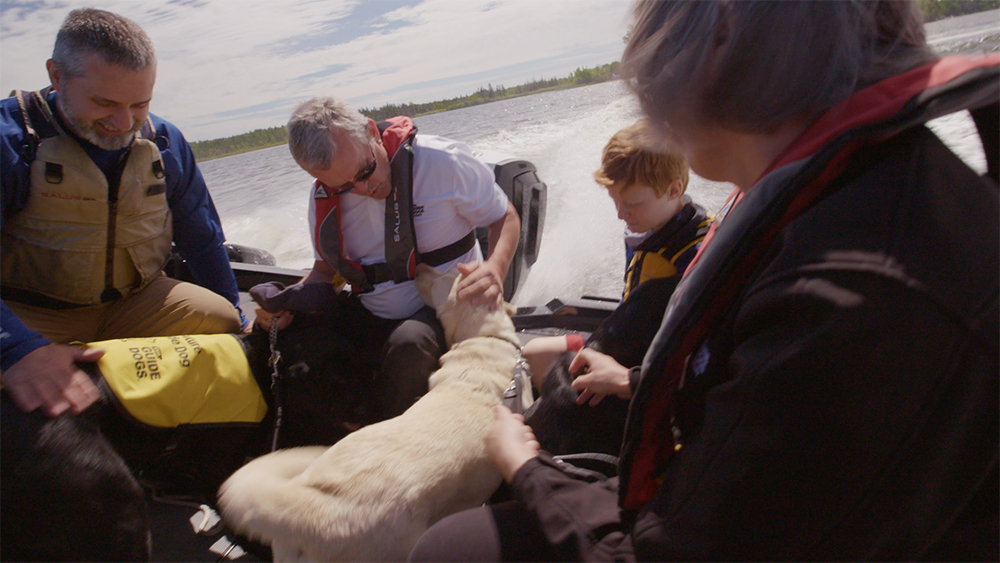
The documentary would show how a group of young guide dog trainees were gradually introduced to a variety of outdoor experiences, from snow shoeing to ice fishing, from canoeing to camping, from hiking, from boating to fishing, and more. These were the skills I would normally teach my guide dog to do after I had been matched with one. These were also skills that CNIB would be able to introduce their guide dog trainees to before they are matched with their blind partners.
There are ten episodes in Makings of a Guide Dog:
- EP 1 – Me and My Guide Dog
- EP 2 – Meet the Puppies
- EP 3 – Sledding and Snowshoeing
- EP 4 – Cross-country Skiing and Ice Fishing
- EP 5 – Hiking and Canoeing
- EP6 – Boating and Fishing
- EP 7‒ Camping
- EP8 – Decision Day Â
- EP9 – Big City Challenge
- EP10 – Into the North
We started with seven young 12-month old guide dog trainees. As much as I would have liked to pick which of the seven would be my next guide dog, the final choice had to be that of the trainers. Naturally, I fell in love with just about every one of the dogs at one point or another, but in the end, I was more than pleased with the guide dog that was finally selected to be my next set of eyes.
- In this documentary you will be introduced to:
- Daisy, a female Yellow Labrador Retriever
- Dunstan, a male Yellow Labrador Retriever
- Marion, a female Black/Brindle Labrador Retriever
- Lewis, a male Black Labrador / Golden Retriever mix
- Piper, a male Golden Retriever
- Sherman, a male Yellow Labrador Retriever and littermate to Dunstan
- and Vincent, a male Black Labrador / Golden Retriever mix and a littermate to Lewis
Considerable planning went into the number and variety of outdoor adventures that we took these young dogs on. Each segment required the support of numerous experts and volunteers. Throughout the filming, I kept hearing from the trainers that it was a first for them. But I have to say that I wasn’t surprised to hear that, since up until now, guide dog schools have focused almost exclusively on urban training for a dog to be certified as a guide dog. Life in rural or northern environments has not been part of there program.

Once my new guide dog was chosen, I then had to train with the dog, achieve certification in the city, and then take the new pup on a true northern adventure. We captured it all on video, including where the other six dogs landed – one even made it all the way up to Iqaluit.
I hope that this year-long project will not only raise awareness of all the amazing things that trained guide dogs can do, but also even trigger some ideas in people’s heads about additional things they might like to try.
Based on my own experience, going blind means giving up a lot. Yes, there is plenty I can do, but there’s plenty I can’t. A good dog just moves a few things from the “can’t†pile to the “can†pile. They are also just such good friends, and when so many people are reporting being lonely or depressed, who wouldn’t benefit from having a four-legged best friend?
I hope you enjoy Makings of a Guide Dog. And as they say at the end of most films these days, “No animal was harmed in the making of this series!â€


My Adventures on the Water with the Late Tred Barta
I was saddened to learn of Tred Barta’s passing in August 2019 in an automobile accident. So many memories came flooding back – his desire to do everything the hard way “the Barta way†could certainly bring out the worst and best in people. People either loved him or hated him, but no one could deny his tinasity and love of the outdoors.
Tred’s own personal challenge of overcoming a life-threatening disease at the peak of his TV NBC Sports career left him paralysed but not defeated. He never let anything or anyone hold him back, and I count myself fortunate to have been by his side during a number of his outdoor adventures such as fly fishing for trout in Vale Colorado, to fishing sailfish in Guatemala. It was through our shared passion to fish no matter what our personal challenges might be, (in my case I’m totally blind), led to our engaging in deeply personal and revealing discussions about the many barriers we face as people with disabilities, and how to keep moving forward with determination, integrity, and a good sense of humour. I think what I admired in Tred the most was his sense of humour and creative way of engaging members of the public in his spontaneous real-life public performances that would leave everyone smiling, if not slightly confused.
I first met Tred when a mutual friend invited us to be part of the first-ever all disabled team to compete in the America Cup International Fly fishing Tournament in Colorado. It was after the event had concluded and Tred took out his infamous 150lb-pull long bow that we had a chance to really get to know each other. I think I impressed him with my accuracy that led Tred to invite me on future adventures of his own.
Link to read an account of our America Cup fly fishing results first published in Bob Izumi’s Reel Fishing magazine: https://lawrencegunther.com/blind-fishing-sailfish-using-bait-and-switch/
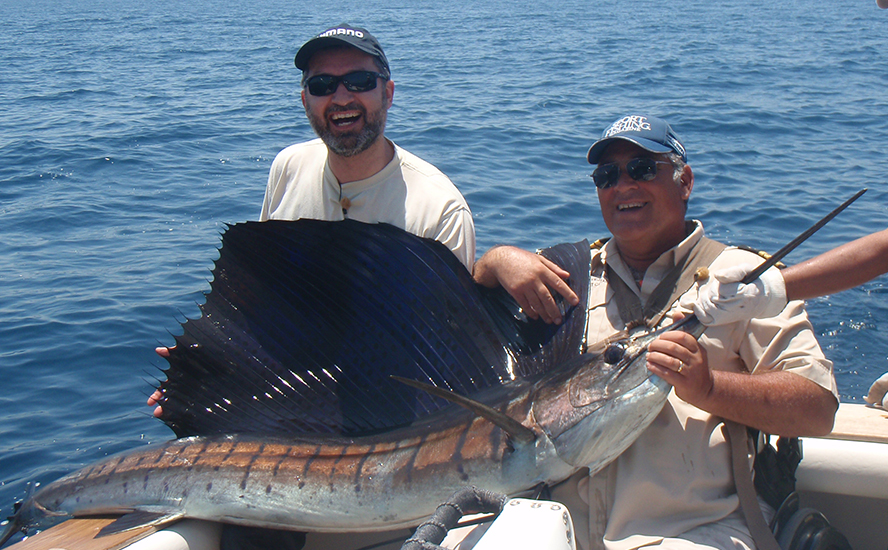
Lawrence and Tred Barta holding a Sailfish
When I received an invitation from Tred to join him, his passed wife Annie, and his film crew in Guatemala for some light tackle fishing for Sailfish, I jumped at the chance. Tred proposed that he would serve as my eyes as we attempted to hook-up sailfish using the bait-and-switch technique, and I would serve as Tred’s arms and hands as I would connect and then play the fish. Well, it didn’t go quite as we planned, but worked out beyond everyone’s wildest dreams in the end.
Link to read my report on our adventure along with great photos: https://lawrencegunther.com/blind-fishing-sailfish-using-bait-and-switch/
Link for Tred Barta’s report on the sailfish adventure published in Sport Fishing magazine: https://www.sportfishingmag.com/blogs/record/you-won-t-believe/
Or
Link to watch this great video of Tred and I ultimately triumphing over the challenge of learning to catch Sailfish on light tackle using the bait-and-switch technique without the use of sight: https://www.youtube.com/watch?v=eqjIotUT2R0


The Idea behind the Charity “Blue Fish Canada”
As many of you, my attachment to fishing began with adventures with my father and three brothers as we captured and then consumed all we caught. Even after I was declared legally blind, I still pursued my passion for fishing, and by my early 20’s, I was fishing commercially for Atlantic Cod aboard wooden dories along the coast of Cape Breton Island. It was an idyllic, if not lucrative, way to spend my summers.
My summer employment hand-lining for Cod lasted for about as long as it took me to fill my quite unnaturally large university student’s head with books, lectures and research. Not all nine of those school years were spent sitting at tiny student desks though. Whenever possible I ventured out to conduct field research including a stint in Alberta climbing mountains, residing in the North West Territories among Inuit and Dena natives, and a year in northern Sweden to lecture and conduct research for my master’s thesis.
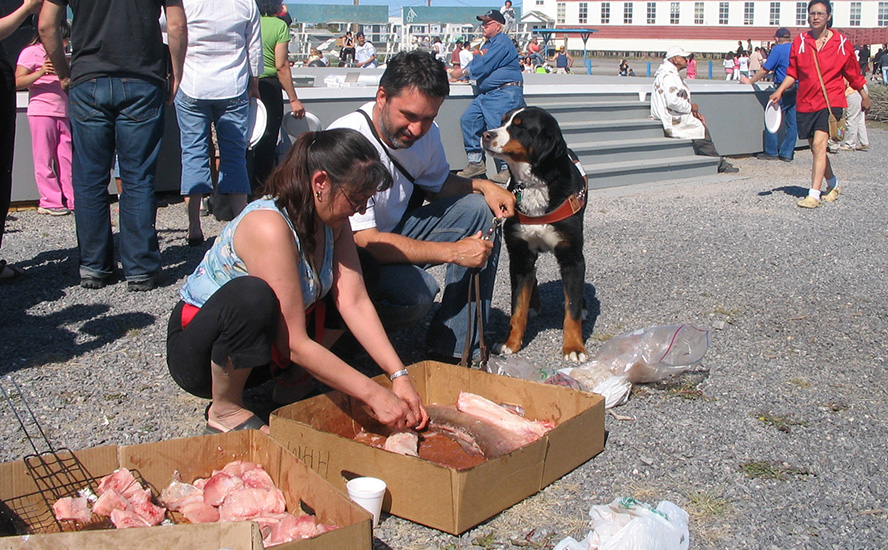
Lawrence speaking with an Inuit woman as she cleans fish with an Ulu
Upon graduating, I became increasingly involved in competitive fishing. I now have well over 100 competitions under my PFD, a half dozen or so wins and a bunch of top-ten finishes. I still fish the odd competitive event, including 14 bass, walleye, musky, salmon and multi-species tournaments scheduled for the 2016 season, but more and more I’m returning to my roots as a devoted recreational angler.
When my remaining vision blinked out in my 40’s, I cobbled together an assortment of talking and audible electronics and pieced together a small electric boat. It restored my ability to fish independently, and garnered me international recognition as the inventor of the world’s first fishing boat for the blind. Not a self-driving boat, but pretty darn close.
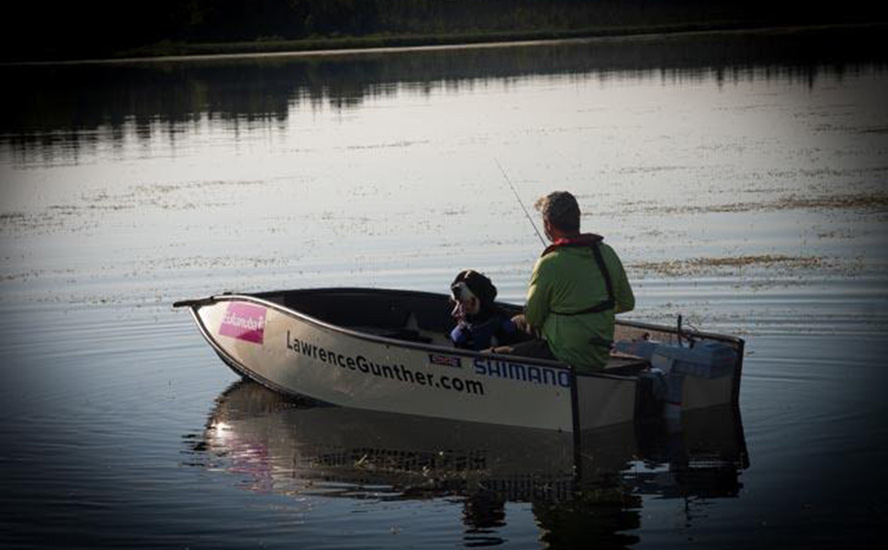
Lawrence in the Blind Fishing Boat
Whether fishing for food, money or fun, vision loss has never been a huge impediment. In fact, I now apply my same visualization skills both above and below the water. The ability to focus without being visually distracted and my reliance on a sense of touch has also led to my becoming quite good at figuring out what’s taking place down below, as well as catching the odd fish. Subsequent SCUBA certification simply confirmed what I had been feeling through my infinitely telescopic sensor – my fishing rod and line.
Apparently I’m in the majority of Canadians who grew up fishing. Nineteen million others claim to have fished and may very likely fish again. Even though it’s the glamour, heart break and instant fame of tournament and commercial fishing that now dominates much of what we read and watch, remarkably, approximately 95% of those who fish do so recreationally. Many anglers still keep fish for the table, but most fish — over half — are now released alive.
Recreational anglers make up the silent majority. We are the people who avoid environmentalists for fear of being judged, and are often overlooked by the tackle and marine industries because, hey, everyone likes to back a winner. That’s all fine, and many prefer it this way, but it doesn’t answer the question, where can we get good information about fishing sustainably?
People seem fed-up hearing about climate change, global warming, acidification of oceans, islands of plastic, etc. It would seem we already know as much as we want to about how our built world and actions are conflicting with nature. What people are asking is what do we need to do differently or better?
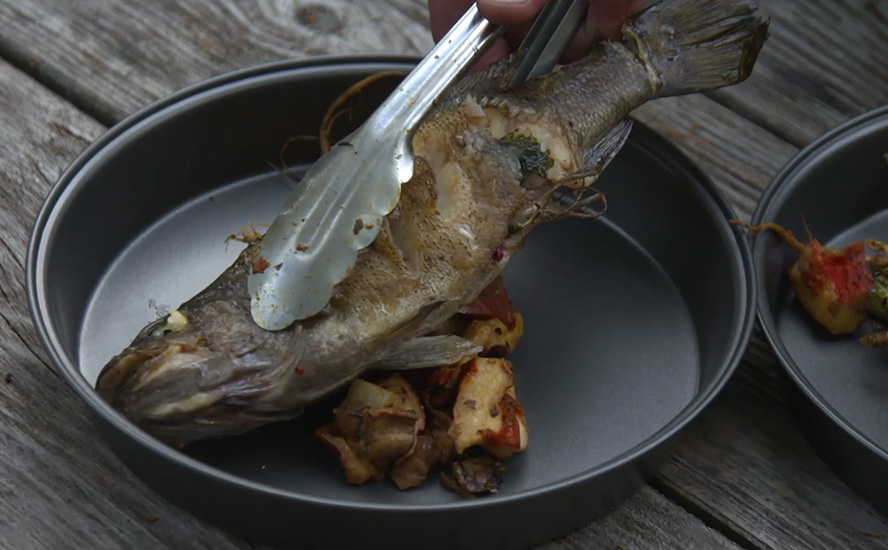
Tin dinner plate featuring fresh caught fish
Thankfully, eating locally produced food has come into vogue. What could be more natural than catching and consuming locally grown, organic, free-range, wild fish? A sort of return to our earliest hunter-gatherer roots. I’m not talking about sticks and stones survival, but learning from the past and incorporating the best science has to offer.
Blue Fish Canada was founded to provide valid and reliable information, instructive anecdotes, the wisdom of many, and simple tips needed to sort out false claims from the truth about what’s really going on underwater. A mix of the best of the old with the latest and greatest. Perspectives that give people the skills to fish, catch fish, release fish and selectively harvest fish with the confidence that they are doing it in ways that will stand the test of time.
The name Blue Fish Canada comes from the idea that fish consist of about 90% water. This means good water quality is fundamental to the survival of fish, just as clean air is important to us terrestrial animals.
Lastly, I believe strongly in science-based decision making, and that citizen science is crucial to conducting good science. It’s us anglers who are out there observing, analyzing, and solving the puzzle each day on where the fish are, what they are doing, and what’s happening in their world.
With the support of some friends who believe in the above, in 2012 we started the process of incorporating Blue Fish Canada with Industry Canada, and registering the non-profit with the Customs and Revenue Agency. It wasn’t easy as the federal government at the time was of the opinion that Canada had more than enough “environmental†charities, and had set in motion a process to investigate and unregister many – never mind allow new ones to be created. However, persistence paid off, and after numerous forms and letters from the government demanding more proof that we weren’t just another anti-energy pressure group, our application was approved. The next five years was spent developing projects, pilot testing their effectiveness, and building up the programs that showed the most promise of bringing value to Canadians. Every cent raised has gone into programs. I’m now happy to report that Blue Fish Canada is a national leader in the area of fish health and conservation, and promoting sustainable recreational fishing.
Please visit the Blue Fish Canada website and share your comments, insights and direct observations. Who knows, it may just make it on to one of my episodes of Blue Fish Radio, a podcast about the future of fish and fishing.

Top 10 – 2018 Highlights
As North America’s Only Blind Professional Angler, outdoor Writer, Podcaster, Film Maker and conservationist, it would appear my commitment to the future of fish and fishing is keeping me busier than ever…

My Feature Documentary: What Lies Below
I created, researched, wrote and hosted the privately funded documentary, What Lies Below to explore the future of fish health and sustainable fishing in Canada.
Your first impression may be that it’s an inspirational” piece focusing on my personal story of vision loss. However, we worked hard to portray my visual disability as an asset without hiding the ramifications of living without sight. It was our goal to show those with sight how to suspend their need to see to believe, and to trust what their other senses are telling them about what’s truly taking place out-of-sight beneath the surface of Canada’s rivers, lakes and three oceans.
Festivals and organized screenings around the world continue to feature the documentary, and TV broadcasters such as CBC Doc Channel and AMI TV continue to air the documentary over TV.
The following short review was published after What Lies Below premiered as the closing film at the Planet in Focus Film Festival to a packed house at the Hot Docs Theatre in Toronto:
From TheGate.ca: This year’s closing night film (screening at Hot Docs Ted Rogers Cinema comes from Canadian filmmaker Emanuel Hoss-Desmarais, whose last film was his stunningly gorgeous debut feature Whitewash, starring Thomas Hayden Church as an alcoholic Quebecois plow driver who makes a deadly misjudgment. His follow-up is What Lies Below, an equally stunning documentary that focuses on Lawrence Gunther, a legally blind environmental advocate documenting the effects of waste, sewage, and pollution on fish populations and water supplies. The most gorgeous looking film at this year’s festival (which actually says a lot for an environmental film showcase), What Lies Below balances the personal, the political, and the environmental wonderfully, making the audience learn just as much about Lawrence as they do the world around him. It’s a disarmingly emotional experience that proves beyond a shadow of a doubt (and please pardon the pun) that we can’t keep turning a blind eye to how we treat the world around us.
Gunther’s unique ability to visualize what lies out-of-sight beneath the surface of Canada’s rivers, lakes and oceans is further explored in the following Published review.
A more in-depth interview with the film’s Director provides insight how the eleven stories were chosen and presented.
Gunther’s presentation at a recent U.S. River Keeper conference earned him the Conference’s first-ever standing ovation and a glowing review.
For more about the doc and to preview the trailer, visit: www.WhatLiesBelow.ca.
To arrange a speaking engagement with me, Lawrence Gunther, call 613-882-3028 or email Lawrence@lawrencegunther.com.
To host a screening of the documentary, fill out the Screening Agreement and return to Melanie Carignan, Director of Post Production, Cinelande Inc. at email: mcarignan@post430.com
Follow What Lies Below at:
Facebook: https://www.facebook.com/WhatLiesBelowMovie/
Twitter: https://twitter.com/WhatLies_Below
Website: whatliesbelow.ca

Summer Up-Date from the President
Four short descriptions of exciting Blue Fish Canada projects we want to bring to your attention:

Age of aquariums
Do public aquariums have anything to do with recreational angling? That’s the question I wanted to answer when I set out to visit a dozen of North America’s top research aquariums for my Blue Fish Radio podcast. After interviewing 26 aquarium officials, including biologists, researchers, volunteers, communication specialists and even one of the top people at the Association of Zoos and Aquariums, I’ve concluded that public aquariums not only support fishing, they depend on us anglers for the success of many of their projects. Let me explain.

Photo of a Puffer fish
Aquariums were first conceived in the 1920s with the sole purpose of giving people a chance to view wildlife from beneath the waves, where it otherwise can’t be easily seen. Starting in the 1980s, however, aquariums began to understand that they needed to do much more to stay relevant.
Today, they offer visitors all manner of information, countless ways to get their hands wet and the chance to help ensure the future of wild fish.
For example, the non-profit Vancouver Aquarium uses admission fees to support programs for research, conservation, education, monitoring, cleanup, rescue, rehabilitation, volunteers, apprenticeships and more. Even Toronto’s for-profit Ripley’s Aquarium of Canada supports conservation and research. In fact, the Association of Zoos and Aquariums, which is responsible for certifying public aquariums, mandates such efforts as part of its certification criteria.
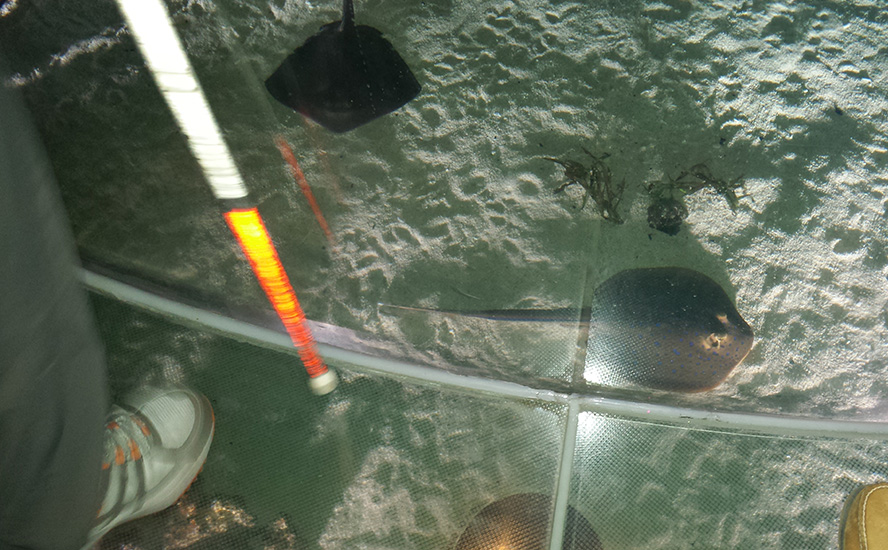
Ray’s observable through a glass floor
Across Canada and the U.S., anglers contribute more volunteer hours toward fish conservation than any other interest group. Aquariums know this, and appreciate the passion anglers have for safeguarding fish and fish habitat. As a result, they’ve developed programs that rely heavily on the participation of anglers and their organizations.
The Vancouver Aquarium, for example, organizes the Great Canadian Shoreline Cleanup program to coordinate riverbank and lake shoreline rehabilitation. An online mapping tool even helps volunteer groups, including numerous fishing clubs, target their cleanup activities to avoid duplication of efforts.
Then there’s the Great Lakes Fish Finder app recently launched by Chicago’s Shedd Aquarium. It was developed for recreational anglers and commercial fishermen to collect data on the presence of both native and invasive fish species throughout the Great Lakes. The app also helps recreational anglers identify fish species and log their catches.
Lawrence and his kids interacting at an exhibit
Meanwhile, the Tennessee Aquarium is working closely with anglers to collect important catch-and release information on sturgeon, helping aquarium scientists monitor reintroduction efforts throughout more than 560 kilometres of river. Similarly, Trout Unlimited is funding the aquarium’s reintroduction of Southern Appalachian brook trout, which were almost brought to extinction owing to deforestation, the introduction of invasive species and climate change. The Tennessee chapter of the American Fisheries Society recently acknowledged the aquarium for its leadership in these conservation initiatives.
Two more examples of how aquariums are tied to the angling world are the Monterey Bay Aquarium’s Seafood Watch and the Vancouver Aquarium’s Ocean Wise fish consumption guides. Both programs promote sustainable fishing by encouraging people to eat fish caught in ways that don’t impact the ability of our oceans and lakes to replace the fish being caught.
Clearly, public aquariums depend on anglers for much more than our entry fees. They need anglers to continue being stewards of aquatic ecosystems and to get behind programs designed to improve fish habitat and fish numbers. With so many pressures impacting our fisheries, we as anglers need to be better informed than ever to identify and report issues before they become real problems. And as part of this, we need to support aquariums in their research and conservation work, as well as in their efforts to educate the public about living and fishing sustainably.
So, the next chance you get to visit an aquarium, look beyond the super-sized tanks and spectacular fish and talk to one of the staff biologists about your passion for angling—I have yet to meet one whose career path didn’t start with a love for fishing. Not only will you likely learn something about fish that you can use out on the water, you’ll also be doing your part to strengthen the bond between aquariums and anglers.
Visit the Blue Fish Canada website for photos, details and links to each Blue Fish Radio episode podcast for each of the 12 aquariums visited by the author and his family: http://bluefishcanada.ca/special-feature-aquariums-of-north-america/
(Published originally in Outdoor Canada Magazine)

NOAA’s Fisheries Science and Management for Recreational Anglers Workshop
I’m proud to have the honor of being the first Canadian to take part in the National Oceanic and Atmospheric Administration (NOAA) 3-day Fisheries Science and Management for Recreational Anglers Workshop

2018 Canadian Sport Fishing Hall of Fame
Hear the reactions from key industry and media leaders including this year’s key note presenter, Dave Mercer

Lawrence and Moby’s 2017 Year-End Highlights
While the late and stormy spring may have delayed the start of our open water fishing, it freed up time to do even more to plan, promote and celebrate outdoor traditions.
Where can I get a Guide / Service / PTSD dog?
/by LawrenceHello Evin,
Having gone blind three different times in my life, first as a child who lost central vision, second as a young man who had to learn to live without seeing important details, and third as someone later in life who has since lost the ability to see light and movement. Three different events with vastly different outcomes. It may have been easier to just jump right to the end, but that wasn’t the hand that I was dealt.
It takes time to readjust to new circumstances. Progress can be quick to begin with, but the last finishing touches can take more time and effort. You know you will have reached full rehabilitation when you start getting through your days without the disability coming to mind. It’s possible.
With respect to guide dog schools, there are two issues that need to be considered. One, the quality of the dogs and training, and two, the after-care support. In my opinion, Mira does a good job at both.
The issue with seeing well and using a guide dog is that you won’t necessarily follow the dog and this will end up putting you in a dangerous position. Don’t worry, when you are assessed for guide dog training they will cover your eyes.
You aren’t the only one with multiple challenges and service requirements. How well a service dog school can train a dog to address your specific blend is the real question. I know Mira has been in the fore-front of innovative thinking and training in this regard, but you will need to determine that for yourself. Not all schools want to deal with people who cross over lines of the traditional service dog types.
Having good independent mobility and orientation skills is important, and to this end, Mira is the only school in Canada that has an O/M instructor on site throughout each class. You only need to be able to leave your home and get around the block and back on your own to qualify. With 80% unemployment among the blind in Canada, there are lots of folks with guide dogs who don’t often have the need to venture far from home.
I’m not totally familiar with the specific services PTSD dogs provide, but I can say that all dogs bond and eventually reflect your emotional state. You will learn to know your mood from your dog’s behaviour before you know it yourself. They are truly gifted in non-verbal communications. It’s us who depend on language. Dogs read body language and smell different emotions. We should all learn from dogs how to be more sensitive to each other’s emotional and physical state.
Keep me posted on developments if you want, and please feel free to reach out as you see fit.
Best regards, Lawrence
Outdoors with Lawrence Gunther Update
/by LawrenceIt’s been three months and 12 episodes since we launched the podcast Outdoors with Lawrence Gunther. Producing the podcast is challenging as it’s not simply long-form interviews.
We feature people and places of interest to Canadians seeking new, interesting and accessible outdoor adventures. Each 28-minute episode is subdivided into five segments: a short introduction , a conversation with young Lilly about interesting facts she’s found that relate to the storyline, a bucket list feature designed to tempt you to try something new, some tips and related tech to make sure you get the most out of your adventure, and some campfire reflections about my own experiences as a blind outdoor enthusiast.
If you like what you’re hearing, please take a minute to send us some “love” in the form of ranking and comments. Please visit Apple Podcast to make your feelings known so that others might find out about the resource we are working so hard to create: https://podcasts.apple.com/ca/podcast/outdoors-with-lawrence-gunther/id1530444764
We also welcome your suggestions. Reach out over Facebook by visiting our fan page at Lawrence Gunther Outdoors.
Send an email to Lawrence@LawrenceGunther.Com
Or send us a Tweet
@LawrenceGunther.
Here’s some interesting content we came across recently that you might want to check out. James Black from Wilderness redefined is a blogger on the many benefits (mental, physical, and family bonding) of being around nature and getting outdoors. His blogs are full of practical info and tips. You can link to his latest blog here: https://wildernessredefined.com/benefits-of-being-outdoors/
Thanks for listening and stay tuned. We will be announcing some give-aways soon!
Warmest,
Lawrence and Lilly
Lawrence Gunther – Fisher, Filmmaker, Adventurer
/by LawrenceNov. 17, 2020
Written By Shana Cesaire
Ottawa Adventure Film Festival
Lawrence Gunther is the host of this year’s Accessibility in Adventure program. Lawrence has established himself as a pillar in our community. Declared legally blind at the age of 8, and progressively losing more of his sight as he aged, Lawrence has not let his disability hold him back in life.
Upon visiting his website, you will quickly observe that Lawrence is always booked and busy – when not fishing, he can also be found kayaking, sailing, cross-country skiing, and much more. He also produces a lot of media – podcasts, video series, and film.
We talked to Lawrence about what he’s working on these days and his love of film.
Lawrence Gunther at Miles Canyon
You seem to be a jack of all trades. Is fishing your number one sport?
Yeah, I think I would say I fish about 70 days a year. I like fishing because it’s a way for me to connect to nature in all the ways that are not visual. A lot of people enjoy nature through their eyes, but I enjoy nature through all of my other senses, and that includes connecting with nature directly with my hands and through smell.
Tell me about a project that you’re working on right now
What’s capturing my attention these days is the fact that we’re seeing a lot of people who have picked up fishing this year because of the pandemic – which has meant more fishing lessons this year than ever before. A project that I started with some support from donors is called Urban Fishing. We are trying to start a process of identifying urban shoreline spaces that are well suited to become naturalized spaces to allow youth and others to access for fishing.
We documented what Toronto has done in four different spaces along the Lake Ontario shoreline, and now we’re replicating that in the Ottawa area. We hope to share that blueprint with other communities that are interested in identifying those fishing areas within urban spaces for youth. Not everyone has the chance to get out of the city to go fishing, and it’s important that people have that chance to connect with nature.
What areas in Ottawa would that include?
The Ottawa River, Rideau River, Dows Lake, Mooney’s Bay. A lot of these places are nice and hidden.
What was it like MCing for OAFF last year?
I was the MC on a night that featured one of my friends’ documentaries. It was a lot of fun. It was great to be able to tell a few stories and share some reflections. I’m excited to host the program this year.
What else made you want to be a host for the film festival this year?
I’ve always had a passion for photography, even though I was registered blind at age 8. When I was in college, I met another young man who was visually impaired, and he was a professional photographer. I became his helper for a few years on a bunch of projects, and it was fascinating. I loved it. I still have a strong interest in producing film.
What films have you produced?
I created a 79 minutes documentary, What Lies Below, that just finished a three year exclusive airing through CBC. I also do Lake2Plate mini documentaries with Five2Nine. I did a one hour documentary about the Yukon. And a bunch of other smaller short-form content.
So you are still very much involved with film projects.
Yeah, I like to get involved in projects that I can actually get involved as a producer or creator.
I know that you lost your vision in three different stages in life, and that experience has shaped your life at least three different times. Do you have any words of encouragement for others who have had to go through similar adversity and who also want to live their life to the fullest, specifically in the outdoors?
With everything in life, there’s sacrifices and things that happen, and things you lose. It’s important to grieve those losses, and through grievance we develop an understanding. Whether it’s a loss of sight, or something you really like to do that you can no longer do. When we go through that grieving process, we put a phase of our life behind us so that we can open up new phases in our life without getting stuck.
Lawrence and Moby
Do you feel like we’ve progressed more towards creating an authentic space in media for people who are visually impaired?
Not yet. I think there’s strong demand and financial incentive to do the tell-all, introspective storytelling. But I think it’s based on the assumption that being blind must be hell. By telling stories about blindness, you’re feeding into that myth. We’re all lacking in some way, but it makes us unique and helps us develop different perspectives. I think we have to realize what that perspective is and how it’s better in some ways. That’s a conversation that hasn’t really started yet.
Do you feel like you have opportunities as a blind filmmaker?
I am fortunate to have people behind me that believe in my ability to produce film, but I don’t think that’s a given. People would think that anything that had to do with film and me would be a focus on my vision loss, and documenting that. That’s not what I do. I don’t do videos that focus on my vision loss. I use my vision loss as a strength in the way that I create film. It’s not a disability, it’s a new way of approaching it.
Lawrence Gunther is definitely a pillar in our community, and we look forward to welcoming as host of our Accessibility in Adventure program on November 18.
See the full film festival program and get tickets here.
Makings of a Guide Dog
/by LawrenceOn a number of occasions over the past half-dozen years, CEO and President of CNIB John Rafferty and I discussed the possibility of the CNIB offering a guide dog program unique to all others. It was a need that John was convinced Canadians everywhere living with vision loss required, as I did. Canada is a big diverse country with a population disbursed throughout rural, remote, northern, and urban communities. Each setting poses its own unique set of challenges.
Who better than CNIB to ensure people living with vision loss receive guide dog services in their communities?
In November 2018, I was recruited to join CNIB Board of Directors, which was also the same year that CNIB decided to move forward with its own guide dog program. I wanted to do my bit to help out with what I knew would be an important project for any Canadian living with vision loss. Little did I know then that this invitation would lead to my filming a documentary: Makings of a Guide Dog.
This was a time of strange coincidence because this was also the time that my beloved guide dog Moby suddenly passed away from cancer. He was only eight years old. I knew my next guide dog would come from the CNIB, but that’s about as far as I had thought through the process. It wasn’t until John and I were having dinner together during CNIB’s 100th annual general meeting that we began talking about how best to inform Canadians about CNIB’s new community-based guide dog program. People needed to know there now exists an in-Canada and at-home guide dog matching service that is focused exclusively on training guide dogs.
After thinking it over, I came up with the idea of a video series that would document the guide dog training process. The title explains it Makings of a Guide Dog. The idea was to document and share with the public my own guide dog matching experience. We would document the practical aspects of the pairing process, but more importantly, capture the kind of skills that my guide dog would need to learn and develop in order to support me in my very active outdoor lifestyle.
The documentary would show how a group of young guide dog trainees were gradually introduced to a variety of outdoor experiences, from snow shoeing to ice fishing, from canoeing to camping, from hiking, from boating to fishing, and more. These were the skills I would normally teach my guide dog to do after I had been matched with one. These were also skills that CNIB would be able to introduce their guide dog trainees to before they are matched with their blind partners.
There are ten episodes in Makings of a Guide Dog:
We started with seven young 12-month old guide dog trainees. As much as I would have liked to pick which of the seven would be my next guide dog, the final choice had to be that of the trainers. Naturally, I fell in love with just about every one of the dogs at one point or another, but in the end, I was more than pleased with the guide dog that was finally selected to be my next set of eyes.
Considerable planning went into the number and variety of outdoor adventures that we took these young dogs on. Each segment required the support of numerous experts and volunteers. Throughout the filming, I kept hearing from the trainers that it was a first for them. But I have to say that I wasn’t surprised to hear that, since up until now, guide dog schools have focused almost exclusively on urban training for a dog to be certified as a guide dog. Life in rural or northern environments has not been part of there program.
Once my new guide dog was chosen, I then had to train with the dog, achieve certification in the city, and then take the new pup on a true northern adventure. We captured it all on video, including where the other six dogs landed – one even made it all the way up to Iqaluit.
I hope that this year-long project will not only raise awareness of all the amazing things that trained guide dogs can do, but also even trigger some ideas in people’s heads about additional things they might like to try.
Based on my own experience, going blind means giving up a lot. Yes, there is plenty I can do, but there’s plenty I can’t. A good dog just moves a few things from the “can’t†pile to the “can†pile. They are also just such good friends, and when so many people are reporting being lonely or depressed, who wouldn’t benefit from having a four-legged best friend?
I hope you enjoy Makings of a Guide Dog. And as they say at the end of most films these days, “No animal was harmed in the making of this series!â€
Lawrence Gunther’s 2019 Year-End report
/by LawrenceMy Adventures on the Water with the Late Tred Barta
/by LawrenceI was saddened to learn of Tred Barta’s passing in August 2019 in an automobile accident. So many memories came flooding back – his desire to do everything the hard way “the Barta way†could certainly bring out the worst and best in people. People either loved him or hated him, but no one could deny his tinasity and love of the outdoors.
Tred’s own personal challenge of overcoming a life-threatening disease at the peak of his TV NBC Sports career left him paralysed but not defeated. He never let anything or anyone hold him back, and I count myself fortunate to have been by his side during a number of his outdoor adventures such as fly fishing for trout in Vale Colorado, to fishing sailfish in Guatemala. It was through our shared passion to fish no matter what our personal challenges might be, (in my case I’m totally blind), led to our engaging in deeply personal and revealing discussions about the many barriers we face as people with disabilities, and how to keep moving forward with determination, integrity, and a good sense of humour. I think what I admired in Tred the most was his sense of humour and creative way of engaging members of the public in his spontaneous real-life public performances that would leave everyone smiling, if not slightly confused.
I first met Tred when a mutual friend invited us to be part of the first-ever all disabled team to compete in the America Cup International Fly fishing Tournament in Colorado. It was after the event had concluded and Tred took out his infamous 150lb-pull long bow that we had a chance to really get to know each other. I think I impressed him with my accuracy that led Tred to invite me on future adventures of his own.
Link to read an account of our America Cup fly fishing results first published in Bob Izumi’s Reel Fishing magazine: https://lawrencegunther.com/blind-fishing-sailfish-using-bait-and-switch/
Lawrence and Tred Barta holding a Sailfish
When I received an invitation from Tred to join him, his passed wife Annie, and his film crew in Guatemala for some light tackle fishing for Sailfish, I jumped at the chance. Tred proposed that he would serve as my eyes as we attempted to hook-up sailfish using the bait-and-switch technique, and I would serve as Tred’s arms and hands as I would connect and then play the fish. Well, it didn’t go quite as we planned, but worked out beyond everyone’s wildest dreams in the end.
Link to read my report on our adventure along with great photos: https://lawrencegunther.com/blind-fishing-sailfish-using-bait-and-switch/
Link for Tred Barta’s report on the sailfish adventure published in Sport Fishing magazine: https://www.sportfishingmag.com/blogs/record/you-won-t-believe/
Or
Link to watch this great video of Tred and I ultimately triumphing over the challenge of learning to catch Sailfish on light tackle using the bait-and-switch technique without the use of sight: https://www.youtube.com/watch?v=eqjIotUT2R0
Blue Fish Radio Celebrates Five years and 250 Episodes
/by LawrenceThe Idea behind the Charity “Blue Fish Canada”
/by LawrenceAs many of you, my attachment to fishing began with adventures with my father and three brothers as we captured and then consumed all we caught. Even after I was declared legally blind, I still pursued my passion for fishing, and by my early 20’s, I was fishing commercially for Atlantic Cod aboard wooden dories along the coast of Cape Breton Island. It was an idyllic, if not lucrative, way to spend my summers.
My summer employment hand-lining for Cod lasted for about as long as it took me to fill my quite unnaturally large university student’s head with books, lectures and research. Not all nine of those school years were spent sitting at tiny student desks though. Whenever possible I ventured out to conduct field research including a stint in Alberta climbing mountains, residing in the North West Territories among Inuit and Dena natives, and a year in northern Sweden to lecture and conduct research for my master’s thesis.
Lawrence speaking with an Inuit woman as she cleans fish with an Ulu
Upon graduating, I became increasingly involved in competitive fishing. I now have well over 100 competitions under my PFD, a half dozen or so wins and a bunch of top-ten finishes. I still fish the odd competitive event, including 14 bass, walleye, musky, salmon and multi-species tournaments scheduled for the 2016 season, but more and more I’m returning to my roots as a devoted recreational angler.
When my remaining vision blinked out in my 40’s, I cobbled together an assortment of talking and audible electronics and pieced together a small electric boat. It restored my ability to fish independently, and garnered me international recognition as the inventor of the world’s first fishing boat for the blind. Not a self-driving boat, but pretty darn close.
Lawrence in the Blind Fishing Boat
Whether fishing for food, money or fun, vision loss has never been a huge impediment. In fact, I now apply my same visualization skills both above and below the water. The ability to focus without being visually distracted and my reliance on a sense of touch has also led to my becoming quite good at figuring out what’s taking place down below, as well as catching the odd fish. Subsequent SCUBA certification simply confirmed what I had been feeling through my infinitely telescopic sensor – my fishing rod and line.
Apparently I’m in the majority of Canadians who grew up fishing. Nineteen million others claim to have fished and may very likely fish again. Even though it’s the glamour, heart break and instant fame of tournament and commercial fishing that now dominates much of what we read and watch, remarkably, approximately 95% of those who fish do so recreationally. Many anglers still keep fish for the table, but most fish — over half — are now released alive.
Recreational anglers make up the silent majority. We are the people who avoid environmentalists for fear of being judged, and are often overlooked by the tackle and marine industries because, hey, everyone likes to back a winner. That’s all fine, and many prefer it this way, but it doesn’t answer the question, where can we get good information about fishing sustainably?
People seem fed-up hearing about climate change, global warming, acidification of oceans, islands of plastic, etc. It would seem we already know as much as we want to about how our built world and actions are conflicting with nature. What people are asking is what do we need to do differently or better?
Tin dinner plate featuring fresh caught fish
Thankfully, eating locally produced food has come into vogue. What could be more natural than catching and consuming locally grown, organic, free-range, wild fish? A sort of return to our earliest hunter-gatherer roots. I’m not talking about sticks and stones survival, but learning from the past and incorporating the best science has to offer.
Blue Fish Canada was founded to provide valid and reliable information, instructive anecdotes, the wisdom of many, and simple tips needed to sort out false claims from the truth about what’s really going on underwater. A mix of the best of the old with the latest and greatest. Perspectives that give people the skills to fish, catch fish, release fish and selectively harvest fish with the confidence that they are doing it in ways that will stand the test of time.
The name Blue Fish Canada comes from the idea that fish consist of about 90% water. This means good water quality is fundamental to the survival of fish, just as clean air is important to us terrestrial animals.
Lastly, I believe strongly in science-based decision making, and that citizen science is crucial to conducting good science. It’s us anglers who are out there observing, analyzing, and solving the puzzle each day on where the fish are, what they are doing, and what’s happening in their world.
With the support of some friends who believe in the above, in 2012 we started the process of incorporating Blue Fish Canada with Industry Canada, and registering the non-profit with the Customs and Revenue Agency. It wasn’t easy as the federal government at the time was of the opinion that Canada had more than enough “environmental†charities, and had set in motion a process to investigate and unregister many – never mind allow new ones to be created. However, persistence paid off, and after numerous forms and letters from the government demanding more proof that we weren’t just another anti-energy pressure group, our application was approved. The next five years was spent developing projects, pilot testing their effectiveness, and building up the programs that showed the most promise of bringing value to Canadians. Every cent raised has gone into programs. I’m now happy to report that Blue Fish Canada is a national leader in the area of fish health and conservation, and promoting sustainable recreational fishing.
Please visit the Blue Fish Canada website and share your comments, insights and direct observations. Who knows, it may just make it on to one of my episodes of Blue Fish Radio, a podcast about the future of fish and fishing.
Top 10 – 2018 Highlights
/by LawrenceAs North America’s Only Blind Professional Angler, outdoor Writer, Podcaster, Film Maker and conservationist, it would appear my commitment to the future of fish and fishing is keeping me busier than ever…
My Feature Documentary: What Lies Below
/by LawrenceI created, researched, wrote and hosted the privately funded documentary, What Lies Below to explore the future of fish health and sustainable fishing in Canada.
Your first impression may be that it’s an inspirational” piece focusing on my personal story of vision loss. However, we worked hard to portray my visual disability as an asset without hiding the ramifications of living without sight. It was our goal to show those with sight how to suspend their need to see to believe, and to trust what their other senses are telling them about what’s truly taking place out-of-sight beneath the surface of Canada’s rivers, lakes and three oceans.
Festivals and organized screenings around the world continue to feature the documentary, and TV broadcasters such as CBC Doc Channel and AMI TV continue to air the documentary over TV.
The following short review was published after What Lies Below premiered as the closing film at the Planet in Focus Film Festival to a packed house at the Hot Docs Theatre in Toronto:
From TheGate.ca: This year’s closing night film (screening at Hot Docs Ted Rogers Cinema comes from Canadian filmmaker Emanuel Hoss-Desmarais, whose last film was his stunningly gorgeous debut feature Whitewash, starring Thomas Hayden Church as an alcoholic Quebecois plow driver who makes a deadly misjudgment. His follow-up is What Lies Below, an equally stunning documentary that focuses on Lawrence Gunther, a legally blind environmental advocate documenting the effects of waste, sewage, and pollution on fish populations and water supplies. The most gorgeous looking film at this year’s festival (which actually says a lot for an environmental film showcase), What Lies Below balances the personal, the political, and the environmental wonderfully, making the audience learn just as much about Lawrence as they do the world around him. It’s a disarmingly emotional experience that proves beyond a shadow of a doubt (and please pardon the pun) that we can’t keep turning a blind eye to how we treat the world around us.
Gunther’s unique ability to visualize what lies out-of-sight beneath the surface of Canada’s rivers, lakes and oceans is further explored in the following Published review.
A more in-depth interview with the film’s Director provides insight how the eleven stories were chosen and presented.
Gunther’s presentation at a recent U.S. River Keeper conference earned him the Conference’s first-ever standing ovation and a glowing review.
For more about the doc and to preview the trailer, visit: www.WhatLiesBelow.ca.
To arrange a speaking engagement with me, Lawrence Gunther, call 613-882-3028 or email Lawrence@lawrencegunther.com.
To host a screening of the documentary, fill out the Screening Agreement and return to Melanie Carignan, Director of Post Production, Cinelande Inc. at email: mcarignan@post430.com
Follow What Lies Below at:
Facebook: https://www.facebook.com/WhatLiesBelowMovie/
Twitter: https://twitter.com/WhatLies_Below
Website: whatliesbelow.ca
Summer Up-Date from the President
/by LawrenceFour short descriptions of exciting Blue Fish Canada projects we want to bring to your attention:
Age of aquariums
/by Lawrence
OUR FISHERIESDo public aquariums have anything to do with recreational angling? That’s the question I wanted to answer when I set out to visit a dozen of North America’s top research aquariums for my Blue Fish Radio podcast. After interviewing 26 aquarium officials, including biologists, researchers, volunteers, communication specialists and even one of the top people at the Association of Zoos and Aquariums, I’ve concluded that public aquariums not only support fishing, they depend on us anglers for the success of many of their projects. Let me explain.
Photo of a Puffer fish
Aquariums were first conceived in the 1920s with the sole purpose of giving people a chance to view wildlife from beneath the waves, where it otherwise can’t be easily seen. Starting in the 1980s, however, aquariums began to understand that they needed to do much more to stay relevant.
Today, they offer visitors all manner of information, countless ways to get their hands wet and the chance to help ensure the future of wild fish.
For example, the non-profit Vancouver Aquarium uses admission fees to support programs for research, conservation, education, monitoring, cleanup, rescue, rehabilitation, volunteers, apprenticeships and more. Even Toronto’s for-profit Ripley’s Aquarium of Canada supports conservation and research. In fact, the Association of Zoos and Aquariums, which is responsible for certifying public aquariums, mandates such efforts as part of its certification criteria.
Ray’s observable through a glass floor
Across Canada and the U.S., anglers contribute more volunteer hours toward fish conservation than any other interest group. Aquariums know this, and appreciate the passion anglers have for safeguarding fish and fish habitat. As a result, they’ve developed programs that rely heavily on the participation of anglers and their organizations.
The Vancouver Aquarium, for example, organizes the Great Canadian Shoreline Cleanup program to coordinate riverbank and lake shoreline rehabilitation. An online mapping tool even helps volunteer groups, including numerous fishing clubs, target their cleanup activities to avoid duplication of efforts.
Then there’s the Great Lakes Fish Finder app recently launched by Chicago’s Shedd Aquarium. It was developed for recreational anglers and commercial fishermen to collect data on the presence of both native and invasive fish species throughout the Great Lakes. The app also helps recreational anglers identify fish species and log their catches.
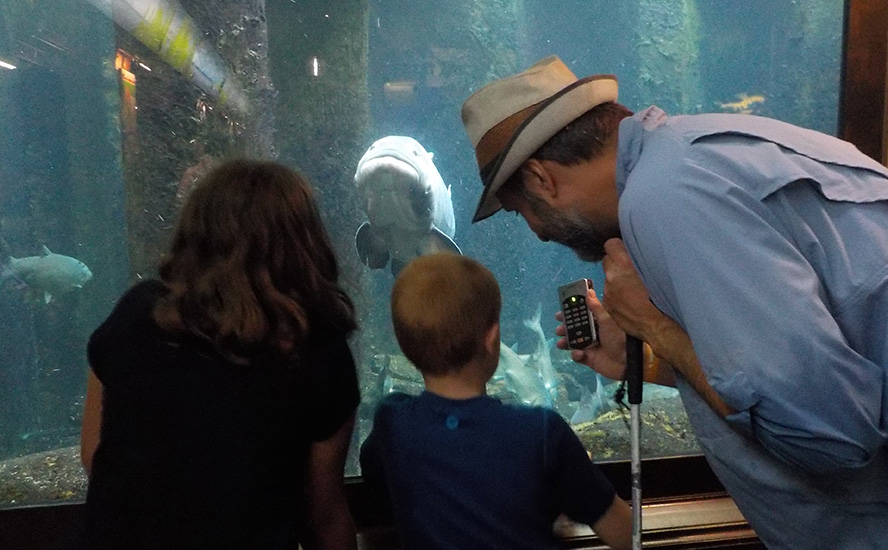
Lawrence and his kids interacting at an exhibit
Meanwhile, the Tennessee Aquarium is working closely with anglers to collect important catch-and release information on sturgeon, helping aquarium scientists monitor reintroduction efforts throughout more than 560 kilometres of river. Similarly, Trout Unlimited is funding the aquarium’s reintroduction of Southern Appalachian brook trout, which were almost brought to extinction owing to deforestation, the introduction of invasive species and climate change. The Tennessee chapter of the American Fisheries Society recently acknowledged the aquarium for its leadership in these conservation initiatives.
Two more examples of how aquariums are tied to the angling world are the Monterey Bay Aquarium’s Seafood Watch and the Vancouver Aquarium’s Ocean Wise fish consumption guides. Both programs promote sustainable fishing by encouraging people to eat fish caught in ways that don’t impact the ability of our oceans and lakes to replace the fish being caught.
Clearly, public aquariums depend on anglers for much more than our entry fees. They need anglers to continue being stewards of aquatic ecosystems and to get behind programs designed to improve fish habitat and fish numbers. With so many pressures impacting our fisheries, we as anglers need to be better informed than ever to identify and report issues before they become real problems. And as part of this, we need to support aquariums in their research and conservation work, as well as in their efforts to educate the public about living and fishing sustainably.
So, the next chance you get to visit an aquarium, look beyond the super-sized tanks and spectacular fish and talk to one of the staff biologists about your passion for angling—I have yet to meet one whose career path didn’t start with a love for fishing. Not only will you likely learn something about fish that you can use out on the water, you’ll also be doing your part to strengthen the bond between aquariums and anglers.
Visit the Blue Fish Canada website for photos, details and links to each Blue Fish Radio episode podcast for each of the 12 aquariums visited by the author and his family: http://bluefishcanada.ca/special-feature-aquariums-of-north-america/
(Published originally in Outdoor Canada Magazine)
NOAA’s Fisheries Science and Management for Recreational Anglers Workshop
/by LawrenceI’m proud to have the honor of being the first Canadian to take part in the National Oceanic and Atmospheric Administration (NOAA) 3-day Fisheries Science and Management for Recreational Anglers Workshop
2018 Canadian Sport Fishing Hall of Fame
/by LawrenceHear the reactions from key industry and media leaders including this year’s key note presenter, Dave Mercer
Lawrence and Moby’s 2017 Year-End Highlights
/by LawrenceWhile the late and stormy spring may have delayed the start of our open water fishing, it freed up time to do even more to plan, promote and celebrate outdoor traditions.